 No Comments
Vision problems such as myopia, hyperopia, astigmatism, and keratoconus—which affect eye health and visual quality—can make daily life difficult. These vision disorders, which progress with age, can also seriously impact independent living in later years. Patients who do not wish to wear contact lenses or glasses, or who want to avoid developing more serious vision problems in the future, often seek laser eye surgery as a solution.
Thanks to laser eye surgery, near-perfect vision without glasses or contact lenses is possible. Laser technology, which has continuously evolved over the past 25 years, offers a permanent solution for vision defects, backed by thousands of successful outcomes. Vision problems can be left behind with a procedure lasting just a few minutes.
Who Can Undergo Eye Laser Surgery?
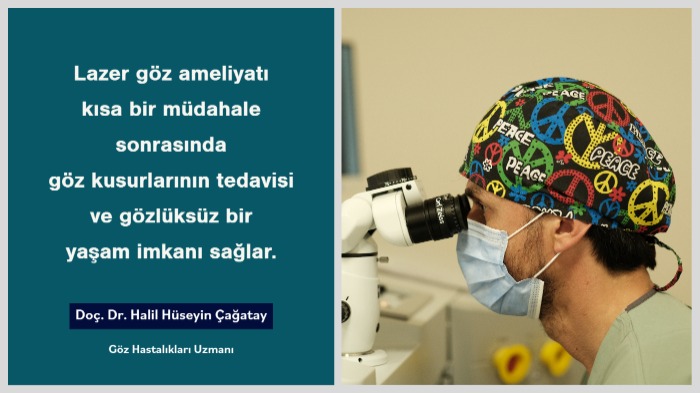
Anyone between the ages of 18 and 45 whose general health is suitable for the procedure can undergo laser eye surgery. Patients aged 20–35 with myopia ranging from -1 to -6 diopters—accompanied by astigmatism of up to -2 or -3 diopters—are particularly ideal candidates for laser eye surgery.
The individual’s corneal thickness must be sufficient for the surgery. During the preliminary examination, the doctor measures the corneal thickness to determine whether the patient is a suitable candidate for the procedure. Additionally, the absence of any change in eyeglass prescriptions over the past year is a crucial criterion for laser eye surgery; otherwise, the surgery should be postponed until the prescription has stabilized.
Laser eye surgery cannot be performed in certain cases. Pregnant women, breastfeeding women, individuals with severe dry eye, those with congenital corneal conditions, patients with diabetic retinopathy, and individuals with a history of ocular herpes are not suitable candidates for this surgery.
Which prescription levels can be treated with laser surgery?
Laser surgeries are performed to correct vision problems. The success and feasibility of the procedure vary depending on the severity of the patient’s vision impairment.
Laser eye surgeries can be performed on patients with astigmatism, hyperopia, and myopia, provided the prescription levels are not excessively high. Thanks to advancing laser technology, the range of treatable prescriptions and success rates are increasing day by day. The treatable prescription range may vary depending on the specific laser method used.
Provided corneal thickness is sufficient, LASIK laser surgery can be performed on patients with myopia ranging from -8 to -10 diopters. For patients with high or mixed astigmatism, the procedure can be carried out for up to 5 diopters. Successful results can generally be achieved in hyperopic patients with prescriptions up to +4 diopters. Laser eye surgery may also be performed, if necessary, on patients with a starting prescription of 0.75 diopters or higher.
How Is a Laser Surgery Examination Performed?
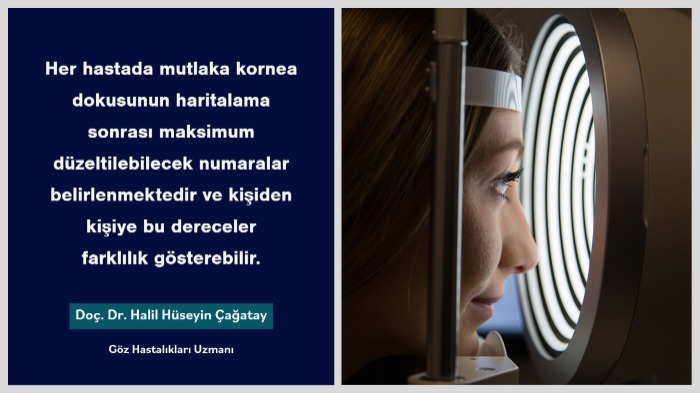
The examination performed prior to laser surgery lays the foundation for a successful procedure. During this process, the corneal thickness, refractive errors, and prescription values are determined in detail. Today, many clinics conduct a suitability test to determine whether the patient is ready for the surgery.
During the examination, the doctor asks the patient questions regarding eye health and performs measurements using various devices. Factors such as intraocular pressure, diabetic status, history of cataract surgery, use of glasses or contact lenses, and dry eye are evaluated.
Based on examination findings and test results, the patient’s suitability for laser eye surgery is clearly established. This minimizes pre-operative risks and ensures that all information necessary for a successful laser eye surgery is obtained.
Am I a Suitable Candidate for Laser Eye Surgery?
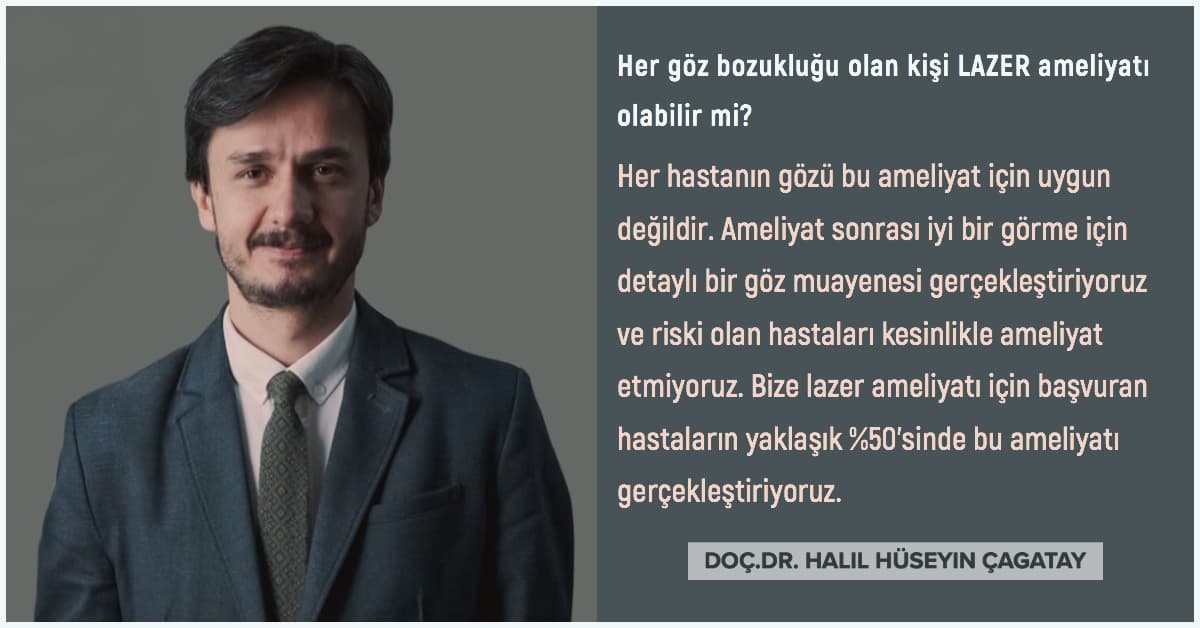
Laser eye surgery is a completely personalized treatment method that is not administered in the same way for every individual. Therefore, a comprehensive examination by an ophthalmologist is essential prior to the surgery.
In general, laser surgery can be performed on individuals who are at least 18 years old and whose eye prescription has remained stable for the past year. Laser eye surgery is not recommended for individuals under the age of 18, as changes in eye structure continue during adolescence.
During the examination, the doctor thoroughly evaluates corneal thickness and eye structure. Surgery can be planned for patients who have sufficient corneal thickness and are in good general health. Depending on the individual’s corneal structure, different laser techniques—such as LASIK, PRK, or SMILE—may be selected.
Individuals who have previously undergone cataract surgery or experienced eye conditions such as retinal tears may be eligible for laser surgery, provided the appropriate prerequisites are met. Similarly, patients with corneal scarring or spots may also be considered candidates for the surgery following a detailed evaluation.
If you wish to find out whether you are a suitable candidate for laser eye surgery, you need to consult a specialist ophthalmologist and undergo the necessary examinations. Your doctor will determine the suitability of your eye structure for the surgery and plan the most appropriate treatment method for you.
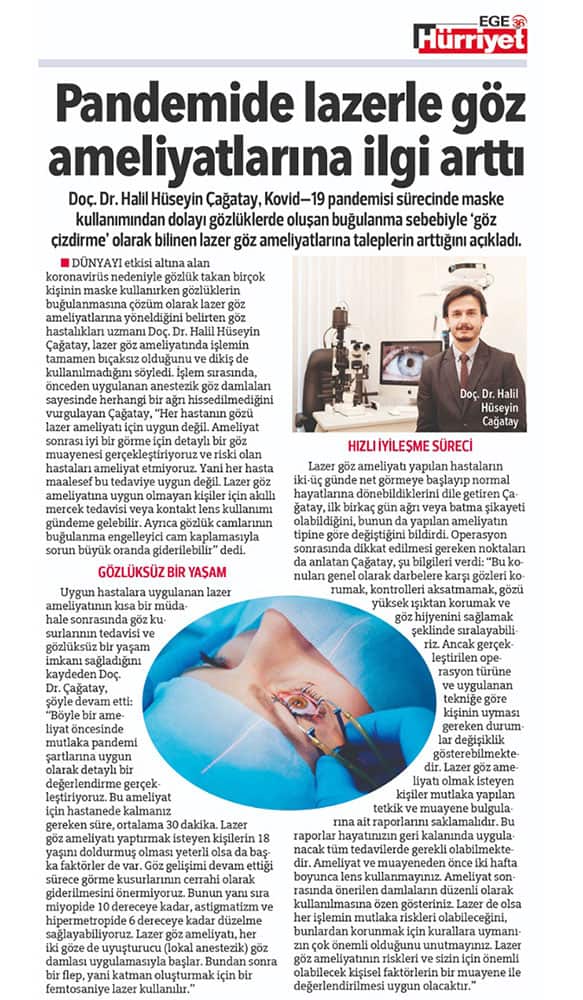
How Is Laser Eye Surgery Performed?
Laser eye surgery is a procedure in which the cornea—the front layer of the eye—is reshaped using a laser beam. Through this procedure, refractive errors such as myopia, hyperopia, and astigmatism are permanently corrected.
Before the surgery, the patient’s eye structure is examined in detail, and the appropriate laser method (LASIK, PRK, or SMILE) is determined. During the procedure, the eye is numbed with anesthetic drops, allowing the patient to undergo the surgery comfortably without feeling pain or discomfort.
The laser device eliminates focusing problems in the eye by performing procedures with millimeter-level precision on specific areas of the cornea. Lasting a total of approximately 10–15 minutes for both eyes, the operation is completed with a high degree of safety thanks to advanced technological systems.
After the surgery, the patient can return home on the same day and easily resume their daily life within a few days.
Laser eye surgery is performed in an operating room or surgical suite that meets strict sterilization standards. The area around the eye is covered, leaving only the eye to be treated exposed, and anesthetic eye drops are administered beforehand to completely numb the eye. As a result, the patient feels no pain or discomfort during the procedure.
Some patients may experience feelings of anxiety and tension. In such cases, mild sedatives may be administered under medical supervision to help the patient relax. Once the patient is ready, a retractor is placed on the eyelid to keep the eye open.
Belirlenen lazer yöntemi (örneğin LASIK, PRK veya Smile Lazer) uygulanarak kornea üzerinde gerekli şekillendirmeler yapılır. İşlem sonrasında gözde herhangi bir kesi veya dikiş atılması gerekmez. Lazerle göz çizdirme ameliyatı, bu özelliğiyle hem hızlı iyileşme süreci hem de minimal rahatsızlık avantajı sunar.
How much does eye laser surgery cost?
Price of eye correction surgery, It varies depending on the clinic where the procedure is performed, the laser technology used, and the patient’s eye structure. Since every individual has a different corneal thickness, type of vision impairment, and prescription, the laser method to be used (e.g., LASIK, PRK, or SMILE) also influences the price.
Laser eye surgery prices are generally determined separately for one or both eyes. Additionally, the technological level of the equipment used and the doctor’s expertise are among the factors that determine the total cost.
You can contact us via our WhatsApp line for questions about laser eye surgery.

Is Laser Surgery Risky?
Laser eye surgery , is a very safe procedure when the right conditions are met. However, as with any surgical intervention, the risks associated with laser surgery can vary depending on the experience of the performing physician, the laser technology used, and the hygiene standards of the center where the operation takes place.
The risk rate is extremely low in operations performed by a specialist ophthalmologist in a sterile operating room environment using advanced laser systems. Modern devices used today offer the possibility of personalized treatment based on patient-specific measurement data.
Excimer laser procedures, which have become widely preferred—especially in recent years—are safe treatments that are completed quickly and carry a very low risk of complications. Thanks to proper planning and a meticulous surgical approach, laser eye surgery stands out as one of the most reliable options for permanent vision correction.
Frequently Asked Questions (FAQ)
How long does laser surgery take?
Laser surgery is a procedure that can be completed in a short time. The entire surgical process is usually finished within 15 minutes. The time spent on the laser procedure itself—that is, treating each eye—ranges from approximately 50 seconds to one minute.
Does the Eye Revert to Its Old Prescription?
In eyes that have undergone laser eye surgery, the refractive error may increase again over time. However, the refractive error never returns to its previous level. In some patients, a refractive error may persist after surgery, requiring the use of glasses. In such a case, a second surgery may be planned.
Is Permanent Treatment for Myopia Possible?
Laser eye surgeries are generally preferred as a permanent solution for treating myopia. If the prescription is very high, however, the eye may undergo further changes in size, depending on the patient’s ocular anatomy or the surgical method used. This is where excimer laser treatment comes to the fore. With proper planning, the progression of the eye prescription can be completely halted.
Which Type of Laser Surgery Is Better?
The laser method chosen varies depending on each patient’s refractive error, corneal structure, and expectations from the surgery. Currently, the most widely used laser eye surgery method is Intralase LASIK (iLASIK). Used to treat refractive errors, this method is considered safer than other laser surgeries.
How Can Strabismus Be Detected?
Strabismus can be defined as a condition in which the eyes are misaligned. One eye may look in a different direction than the other, and the eye muscles—which normally work in unison—fail to maintain this coordination. Strabismus is typically identified by an angular misalignment between the eyes; they may drift inward, outward, upward, or downward. In infants, the eyes are expected to be aligned when focusing on specific objects by the age of four months; early diagnosis is possible by also checking their ability to focus on distant objects at six months of age.
What is Excimer Laser?
Excimer Laser is the most widely performed laser eye surgery method worldwide. Used since 1980, it treats refractive errors in the eye with the aid of a laser. This procedure, which is completed within 15 minutes, can be used to treat myopia up to 10 diopters, as well as astigmatism and hyperopia up to 6 diopters. Thanks to its various subtypes, the most suitable Excimer Laser option can be selected based on the patient’s health status.